研究成果

Mar, 2025
Human hepatocellular carcinoma (HCC) is the most common liver cancer and the third leading cause of cancer-related deaths worldwide. HCC is a malignant tumor that can lead to intrahepatic and extrahepatic metastases. Intercellular adhesion molecule 1 (ICAM-1) is involved in cancer metastasis. ICAM-1 enhances cell-cell interactions by promoting adhesion and facilitating cell movement within the extracellular matrix. Moreover, ICAM-1 is more abundant in cancerous hepatocytes than in non-cancerous ones. Chemokine (C-X-C motif) ligand 1 (CXCL1) is found in diverse cancers, including melanoma, breast, lung, pancreatic, colorectal, and prostate. Several studies show a correlation between CXCL1 overexpression and poor prognosis in cancer. CXCL1 has been identified as a candidate gene that could...

Feb, 2025
Background: Sepsis is characterized by organ dysfunction as a response to infection and is one of the leading causes of mortality and loss of health. The heterogeneous nature of sepsis, along with ethnic differences in susceptibility, challenges a thorough understanding of its etiology. This study aimed to propose prediction models by leveraging genetic-risk scores and clinical variables that can assist in risk stratification of patients. Methods: A total of 1,403 patients from Taiwan, diagnosed with sepsis, were utilized. Genome-wide survival analysis was conducted, with death within 28 days from sepsis onset, as the primary event to report significantly associated SNPs. A polygenic risk score (PRS-sepsis) was constructed via clumping and thresholding method which was added to clinical-...

Feb, 2025
Structural variants (SVs) have been associated with changes in gene expression, which may contribute to alterations in phenotypes and disease development. However, the precise identification and characterization of SVs remain challenging. While long-read sequencing offers superior accuracy for SV detection, short-read sequencing remains essential due to practical and cost considerations, as well as the need to analyze existing short-read datasets. Numerous algorithms for short-read SV detection exist, but none are universally optimal, each having limitations for specific SV sizes and types. In this study, we evaluated the efficacy of six advanced SV detection algorithms, including the commercial software DRAGEN, using the GIAB v0.6 Tier 1 benchmark and HGSVC2 cell lines. We employed both...

Feb, 2025
The rapid development of deep learning has revolutionized medical image processing, including analyzing whole slide images (WSIs). Despite the demonstrated potential for characterizing gene mutations directly from WSIs in certain cancers, challenges remain due to image resolution and reliance on manual annotations for acute myeloid leukemia (AML). We, therefore, propose a deep learning model based on multiple instance learning (MIL) with ensemble techniques to predict gene mutations from AML WSIs. Our model predicts NPM1 mutations and FLT3-ITD without requiring patch-level or cell-level annotations. Using a dataset of 572 WSIs, the largest database with both WSI and genetic mutation information, our model achieved an AUC of 0.90 ± 0.08 for NPM1 and 0.80 ± 0.10 for FLT3-ITD in the testing...

Feb, 2025
Lung cancer is the most common cause of cancer mortality globally, and the prevalence of lung adenocarcinoma, the most common lung cancer subtype, has increased sharply in East Asia. Early diagnosis leads to better survival rates, but this requires an improved understanding of the molecular changes during early tumorigenesis, particularly in nonsmokers. In this study, we performed whole-exome sequencing and RNA sequencing of samples from 94 East Asian patients with precancerous lesions [25 with atypical adenomatous hyperplasia (AAH); 69 with adenocarcinoma in situ (AIS)] and 73 patients with early invasive lesions [minimally invasive adenocarcinoma (MIA)]. Cellular analysis revealed that the activities of endothelial and stromal cells could be used to categorize tumors into molecular...

Jan, 2025
Background: Ovarian cancer is one of the top seven causes of cancer deaths. Incidence of ovarian cancer varies by ethnicity, where Asian women demonstrate lower incidence rates than non-Hispanic Blacks and Whites. Survival prediction models for ovarian cancer have been developed for Caucasians and Black populations using national databases; however, whether these models work for Asians is unclear. Therefore, a retrospective cohort study was conducted to develop survival prediction models for patients with epithelial ovarian cancer from a Taiwan Cancer Registry (TCR) who underwent de-bulking and chemotherapy, with the aim to identify variables that can predict prognosis accurately. Patients diagnosed with OC from TCR were included. Method: Two prognostic models (M1 and M2) were developed:...
Jan, 2025
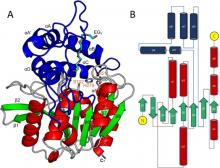
Poly((R)-3-hydroxybutyrate) (PHB) is a microbial biopolymer widely used in commercial biodegradable plastics. PHB degradation in cell is catalyzed by PHB depolymerase (PhaZ), which hydrolyzes the polyester into mono- and/or oligomeric (R)-3-hydroxylbutyrates (3HB). A novel intracellular PhaZ from Bacillus thuringiensis (BtPhaZ) was identified for potential applications in polymer biodegradation and 3HB production. Herein, we present the crystal structure of BtPhaZ at 1.42-Å resolution, making the first crystal structure for an intracellular PhaZ. BtPhaZ comprises a canonical α/β hydrolase catalytic domain and a unique α-helical cap domain. Despite lacking sequence similarity, BtPhaZ shares high structural homology with many α/β hydrolase members, exhibiting a similar active-site...
Dec, 2024
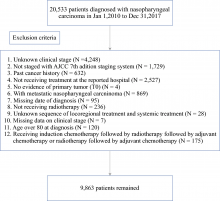
Objective: The aim of this study was to evaluate the efficacy of different treatment intensities (TIs) in patients with nasopharyngeal carcinoma (NPC). Methods: The study assessed newly diagnosed, non-metastatic NPC patients from the Taiwan Cancer Registry between 2010 and 2017. TIs were divided into four groups: TI1 [radiotherapy (RT) alone or induction chemotherapy (IC) followed by RT); TI2 (concurrent chemoradiotherapy (CRT) alone); TI3 (IC followed by CRT or CRT followed by adjuvant chemotherapy (AC)]; and TI4 (IC followed by CRT followed by AC). The primary outcome was cancer-specific survival (CSS). Results: The study included 9863 patients. For stage I-II NPC patients, there was no significant difference in CSS among the different TI groups. For stage III patients, those receiving...
Dec, 2024
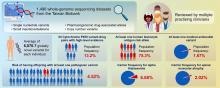
Introduction: The population of Taiwan has a long history of ethno-cultural evolution. The Taiwanese population was isolated from other large populations such as the European, Han Chinese, and Japanese population. The Taiwan Biobank (TWB) project has built a nationwide database, particularly for personal whole-genome sequence (WGS) to facilitate basic and clinical collaboration nationally and internationally, making it one of the most valuable public datasets of the East Asian population.
Objectives: This study provides comprehensive medical genomic findings from TWB WGS data, for better characterization of disease susceptibility and the choice of ideal treatment regimens in Taiwanese population.
Methods: We reanalyzed 1496 WGS using a PrecisionFDA Truth challenge winner method Sentieon...
Oct, 2024
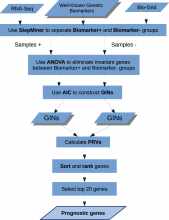
Cancer prognosis requires precision to identify high-risk patients and improve survival outcomes. Conventional methods struggle with the complexity of genetic biomarkers and diverse medical data. Our study uses deep learning to distil high-dimensional medical data into low-dimensional feature vectors exploring shared patterns across cancer types. We developed a multi-task bimodal neural network integrating RNA Sequencing and clinical data from three The Cancer Genome Atlas project datasets: Breast Invasive Carcinoma, Lung Adenocarcinoma, and Colon Adenocarcinoma. Our approach significantly improved prognosis prediction, especially for Colon Adenocarcinoma, with up to 26% increase in concordance index and 41% in the area under the precision-recall curve. External validation with Small Cell...