研究成果
Jun, 2018
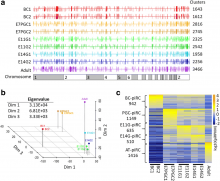
Background: the PIWI/piRNA pathway is a conserved machinery important for germ cell development and fertility. This piRNA-guided molecular machinery is best known for repressing derepressed transposable elements (TE) during epigenomic reprogramming. The extent to which piRNAs are involved in modulating transcripts beyond TEs still need to be clarified, and it may be a stage-dependent event. We chose chicken germline as a study model because of the significantly lower TE complexity in the chicken genome compared to mammalian species.
Results: we generated high-confidence piRNA candidates in various stages across chicken germline development by 3′-end-methylation-enriched small RNA sequencing and in-house bioinformatics analysis. We observed a significant developmental stage-dependent loss...
Feb, 2018
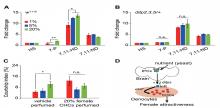
Appropriate sexual selection or individual sexual attractiveness is closely associated with the reproductive success of a species. Here, we report that young male flies exhibit innate courtship preference for female flies that are raised on higher‐yeast diets and that have greater body weight and fecundity, but reduced locomotor activity and shortened lifespan. Male flies discriminate among females that have been fed diets that contain 3 different yeast concentrations—1, 5, and 20% yeast—via gustatory, but not visual or olfactory, perception. Female flies that are raised on higher‐yeast diets exhibit elevated expression levels of Drosophila insulin‐like peptides (dilps), and we demonstrate that hypomorphic mutations of dilp2, 3, 5 or foxo, as well as oenocyte‐specific gene disruption of...
Nov, 2017
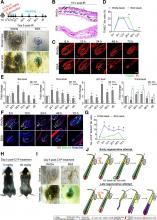
Genotoxicity-induced hair loss from chemotherapy and radiotherapy is often encountered in cancer treatment, and there is a lack of effective treatment. In growing hair follicles (HF), quiescent stem cells (SC) are maintained in the bulge region, and hair bulbs at the base contain rapidly dividing, yet genotoxicity-sensitive transit-amplifying cells (TAC) that maintain hair growth. How genotoxicity-induced HF injury is repaired remains unclear. We report here that HFs mobilize ectopic progenitors from distinct TAC compartments for regeneration in adaptation to the severity of dystrophy induced by ionizing radiation (IR). Specifically, after low-dose IR, keratin 5+ basal hair bulb progenitors, rather than bulge SCs, were quickly activated to replenish matrix cells and regenerated all...
Oct, 2017
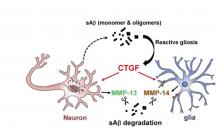
Impaired clearance of amyloid-β peptide (Aβ) leads to abnormal extracellular accumulation of this neurotoxic protein that drives neurodegeneration in sporadic Alzheimer’s disease (AD). Connective tissue growth factor (CTGF/CCN2) expression is elevated in plaque-surrounding astrocytes in AD patients. However, the role of CTGF in AD pathogenesis remains unclear. Here we characterized the neuroprotective activity of CTGF. We found that CTGF facilitated Aβ uptake and subsequent degradation within primary glia and neuroblastoma cells. CTGF enhanced extracellular Aβ degradation via membrane-bound matrix metalloproteinase-14 (MMP14) in glia and extracellular MMP13 in neurons. In the brain of a Drosophila AD model, glial-expression of CTGF reduced Aβ deposits, improved locomotor function, and...
Aug, 2017
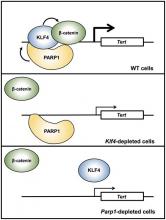
Telomerase is highly expressed in cancer and embryonic stem cells (ESCs) and implicated in controlling genome integrity, cancer formation and stemness. Previous studies identified that Krüppel-like transcription factor 4 (KLF4) activates telomerase reverse transcriptase (TERT) expression and contributes to the maintenance of self-renewal in ESCs. However, little is known about how KLF4 regulates TERT expression. Here, we discover poly(ADP-ribose) polymerase 1 (PARP1) as a novel KLF4-interacting partner. Knockdown of PARP1 reduces TERT expression and telomerase activity not only in cancer cells, but also in human and mouse ESCs. Recruitment of KLF4 to TERT promoter is reduced in PARP1-suppressed cells. The poly(ADP-ribose) polymerase activity is dispensable, while the oligo(ADP-ribose)...

Jul, 2017
In mammals, homologous chromosomes rarely pair outside meiosis. One exception is the X chromosome, which transiently pairs during X-chromosome inactivation (XCI). How two chromosomes find each other in 3D space is not known. Here, we reveal a required interaction between the X-inactivation center (Xic) and the telomere in mouse embryonic stem (ES) cells. The subtelomeric, pseudoautosomal regions (PARs) of the two sex chromosomes (X and Y) also undergo pairing in both female and male cells. PARs transcribe a class of telomeric RNA, dubbed PAR-TERRA, which accounts for a vast majority of all TERRA transcripts. PAR-TERRA binds throughout the genome, including to the PAR and Xic. During X-chromosome pairing, PAR-TERRA anchors the Xic to the PAR, creating a 'tetrad' of pairwise...
Jul, 2017
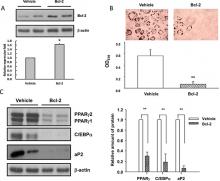
Aging is characterized by mild hyperglycemia and accumulation of advanced glycation end products (AGEs). Effects of chronic exposure to hyperglycemia or AGEs on the adipogenic differentiation of 3T3-L1 preadipocytes remain unclear. We examined the chronic effect of AGEs and high glucose on the differentiation of 3T3-L1 cells by culturing 3T3-L1 cells in the presence of AGEs or 25 mM glucose for 1 month. Chronic incubation of 3T3-L1 cells with AGEs or high glucose blocked their differentiation into mature adipocytes as evidenced by reduced levels of adipocyte markers such as accumulated oil droplets, GPDH, aP2, adiponectin and of adipogenesis regulators PPARγ and C/EBPα. Levels or activities of Src, PDK1, Akt, and NF-κB were higher in AGEs- and high glucose-treated cells than those in 3T3-...
Jul, 2017
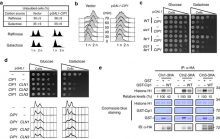
Upon environmental changes, proliferating cells delay cell cycle to prevent further damage accumulation. Yeast Cip1 is a Cdk1 and Cln2-associated protein. However, the function and regulation of Cip1 are still poorly understood. Here we report that Cip1 expression is co-regulated by the cell-cycle-mediated factor Mcm1 and the stress-mediated factors Msn2/4. Overexpression of Cip1 arrests cell cycle through inhibition of Cdk1–G1 cyclin complexes at G1 stage and the stress-activated protein kinase-dependent Cip1 T65, T69, and T73 phosphorylation may strengthen the Cip1and Cdk1–G1 cyclin interaction. Cip1 accumulation mainly targets Cdk1–Cln3 complex to prevent Whi5 phosphorylation and inhibit early G1 progression. Under osmotic stress, Cip1 expression triggers transient G1 delay which plays...
Jul, 2017
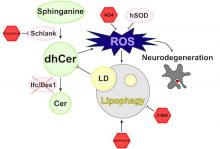
Dihydroceramide desaturases are evolutionarily conserved enzymes that convert dihydroceramide (dhCer) to ceramide (Cer). While elevated Cer levels cause neurodegenerative diseases, the neuronal activity of its direct precursor, dhCer, remains unclear. We show that knockout of the fly dhCer desaturase gene, infertile crescent (ifc), results in larval lethality with increased dhCer and decreased Cer levels. Light stimulation leads to ROS increase and apoptotic cell death in ifc‐KO photoreceptors, resulting in activity‐dependent neurodegeneration. Lipid‐containing Atg8/LC3‐positive puncta accumulate in ifc‐KO photoreceptors, suggesting lipophagy activation. Further enhancing lipophagy reduces lipid droplet accumulation and rescues ifc‐KO defects, indicating that lipophagy plays a protective...
Jun, 2017
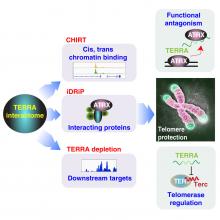
Through an integration of genomic and proteomic approaches to advance understanding of long noncoding RNAs, we investigate the function of the telomeric transcript, TERRA. By identifying thousands of TERRA target sites in the mouse genome, we demonstrate that TERRA can bind both in cis to telomeres and in trans to genic targets. We then define a large network of interacting proteins, including epigenetic factors, telomeric proteins, and the RNA helicase, ATRX. TERRA and ATRX share hundreds of target genes and are functionally antagonistic at these loci: whereas TERRA activates, ATRX represses gene expression. At telomeres, TERRA competes with telomeric DNA for ATRX binding, suppresses ATRX localization, and ensures telomeric stability. Depleting TERRA increases telomerase activity and...