研究成果
Jun, 2017
Ethnopharmacological relevance:
Ludwigia octovalvis (Jacq.) P.H. Raven (Onagraceae) extracts have historically been consumed as a healthful drink for treating various conditions, including edema, nephritis, hypotension and diabetes.
Aim of the study:
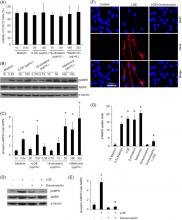
We have previously shown that Ludwigia octovalvis extract (LOE) can significantly extend lifespan and improve age-related memory deficits in Drosophila melanogaster through activating AMP-activated protein kinase (AMPK). Since AMPK has become a critical target for treating diabetes, we herein investigate the anti-hyperglycemic potential of LOE.
Materials and methods:
Differentiated C2C12 muscle cells, HepG2 hepatocellular cells, streptozotocin (STZ)-induced diabetic mice and high fat diet (HFD)-induced diabetic mice were used to...
Jun, 2017
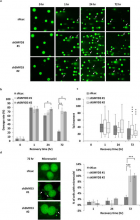
SMYD3 is a methyltransferase highly expressed in many types of cancer. It usually functions as an oncogenic protein to promote cell cycle, cell proliferation, and metastasis. Here, we show that SMYD3 modulates another hallmark of cancer, DNA repair, by stimulating transcription of genes involved in multiple steps of homologous recombination. Deficiency of SMYD3 induces DNA-damage hypersensitivity, decreases levels of repair foci, and leads to impairment of homologous recombination. Moreover, the regulation of homologous recombination-related genes is via the methylation of H3K4 at the target gene promoters. These data imply that, besides its reported oncogenic abilities, SMYD3 may maintain genome integrity by ensuring expression levels of HR proteins to cope with the high demand of...
Jun, 2017
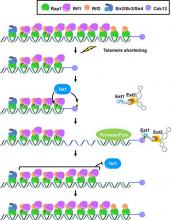
Telomere homeostasis is controlled by both telomerase machinery and end protection. Telomere shortening induces DNA damage sensing kinases ATM/ATR for telomerase recruitment. Yet, whether telomere shortening also governs end protection is poorly understood. Here we discover that yeast ATM/ATR controls end protection. Rap1 is phosphorylated by Tel1 and Mec1 kinases at serine 731, and this regulation is stimulated by DNA damage and telomere shortening. Compromised Rap1 phosphorylation hampers the interaction between Rap1 and its interacting partner Rif1, which thereby disturbs the end protection. As expected, reduction of Rap1–Rif1 association impairs telomere length regulation and increases telomere–telomere recombination. These results indicate that ATM/ATR DNA damage checkpoint signal...
May, 2017
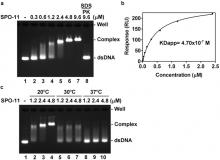
The programmed induction of meiotic DNA double-strand breaks (DSBs) by the evolutionarily conserved SPO-11 protein, which is structurally related to archaeal Topo VIA topoisomerases, triggers meiotic recombination. Identification of several meiosis-specific factors that are required for SPO-11-mediated DSB formation raises the question whether SPO-11 alone can cleave DNA. Here, we have developed procedures to express and purify C. elegans SPO-11 in a soluble, untagged, and monodispersed form. Our biochemical and biophysical analyses demonstrate that SPO-11 is monomeric and binds DNA, double-stranded DNA in particular. Importantly, SPO-11 does not exhibit DNA cleavage activity under a wide range of reaction conditions, suggesting that co-factors are needed for DSB induction activity. Our...
Mar, 2017
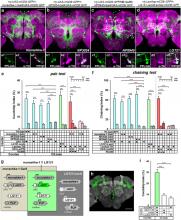
The neurology of male sexuality has been poorly studied owing to difficulties in studying brain circuitry in humans. Dopamine (DA) is essential for both physiological and behavioural responses, including the regulation of sexuality. Previous studies have revealed that alterations in DA synthesis in dopaminergic neurons can induce male-male courtship behaviour, while increasing DA levels in the protocerebral posteriolateral dopaminergic cluster neuron 2ab (PPL2ab) may enhance the intensity of male courtship sustainment in Drosophila. Here we report that changes in the ability of the PPL2ab in the central nervous system (CNS) to produce DA strongly impact male-male courtship in D. melanogaster. Intriguingly, the DA-synthesizing abilities of these neurons appear to affect both the courting...
Jan, 2017
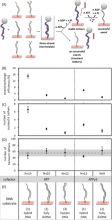
DNA topology is thought to affect DNA enzyme activity. The helical structure of duplex DNA dictates the change of topological states during strand separation when DNA is constrained. During the repair of DNA double-stranded breaks, the RecA nucleoprotein filament invades DNA and carries out consecutive strand exchange reactions coupled with duplex DNA strand separation. It has been suggested that torsional strain could be generated and its accumulation could inhibit strand exchange. We used hairpin and nicked DNA substrates to test how torsional strain alters the RecA-mediated strand exchange efficiency. Single-molecule tethered particle motion (TPM) experiments showed that torsionally constrained hairpin DNA substrates returned nearly no successful strand exchange events catalyzed by...

Jan, 2017
Background:
Hair follicle is miniorgan constituted by keratinocytes and its distinctive mesenchyme of dermal papilla. Its aging is characterized by organ atrophy and impaired stem cell activation and differentiation. The contribution of dermal papilla to hair follicle aging change is not well understood.
Objective:
This work was aimed at exploring the possible role of premature dermal papilla senescence in the pathogenesis of hair follicle aging.
Methods:
Dermal papilla cells were challenged with H2O2 to induce premature senescence and the proliferation, apoptosis, gene expression and protein secretion were characterized. Its effect on epithelial-mesenchymal interaction was analyzed by co-culture in vitro and implantation of protein-coated beads in vivo.
Result...
Mar, 2016
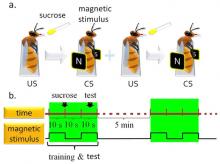
Honey bees have the ability to detect the Earth’s magnetic field, and the suspected magnetoreceptors are the iron granules in the abdomens of the bees. To identify the sensing route of honey bee magnetoreception, we conducted a classical conditioning experiment in which the responses of the proboscis extension reflex (PER) were monitored. Honey bees were successfully trained to associate the magnetic stimulus with a sucrose reward after two days of training. When the neural connection of the ventral nerve cord (VNC) between the abdomen and the thorax was cut, the honey bees no longer associated the magnetic stimulus with the sucrose reward but still responded to an olfactory PER task. The neural responses elicited in response to the change of magnetic field were also recorded at the VNC...
Feb, 2016
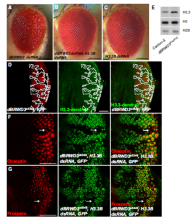
Many causal mutations of intellectual disability have been found in genes involved in epigenetic regulations. Replication-independent deposition of the histone H3.3 variant by the HIRA complex is a prominent nucleosome replacement mechanism affecting gene transcription, especially in postmitotic neurons. However, how HIRA-mediated H3.3 deposition is regulated in these cells remains unclear. Here, we report that dBRWD3, the Drosophila ortholog of the intellectual disability gene BRWD3, regulates gene expression through H3.3, HIRA, and its associated chaperone Yemanuclein (YEM), the fly ortholog of mammalian Ubinuclein1. In dBRWD3 mutants, increased H3.3 levels disrupt gene expression, dendritic morphogenesis, and sensory organ differentiation. Inactivation of yem or H3.3 remarkably...
Feb, 2016
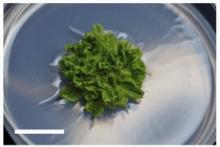
Bryophytes (liverworts, hornworts and mosses) comprise the three earliest diverging lineages of land plants (embryophytes). Marchantia polymorpha, a complex thalloid Marchantiopsida liverwort that has been developed into a model genetic system, occupies a key phylogenetic position. Therefore, M. polymorpha is useful in studies aiming to elucidate the evolution of gene regulation mechanisms in plants. In this study, we used computational, transcriptomic, small RNA and degradome analyses to characterize microRNA (miRNA)-mediated pathways of gene regulation in M. polymorpha. The data have been integrated into the open access ContigViews-miRNA platform for further reference. In addition to core components of the miRNA pathway, 129 unique miRNA sequences, 11 of which could be classified into...